I first saw this poignant painting when I was reeling from the cancer diagnosis of someone very dear to me and was wondering how I could be honest when I prayed Your will be done. I am sure that many people have encountered a similar challenge in times of darkness: how can we be honest in our prayer? how can we say those words and truly mean them? We want to be able to feel and express such obedience to the will of God, but it takes all the emotional and spiritual strength we possess to even begin to utter the words with any sincerity.
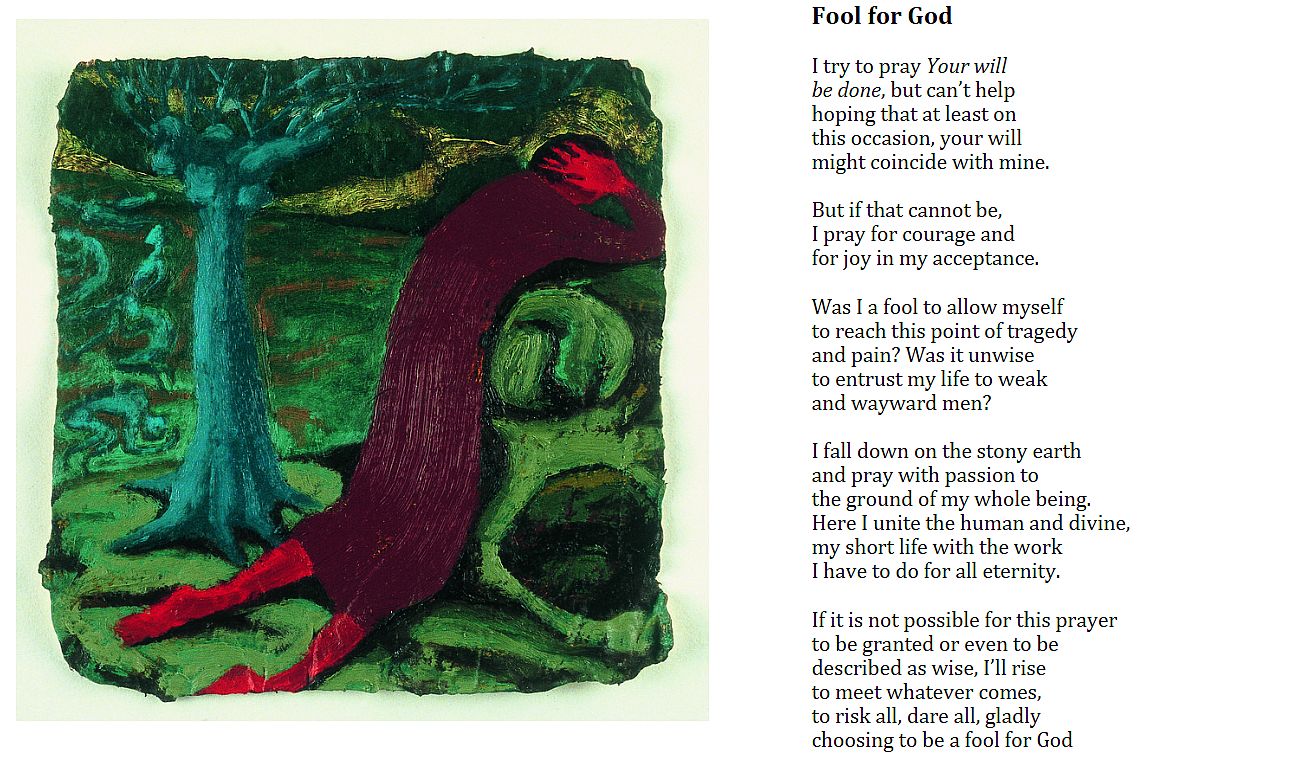
In this intense oil painting, in which the small size further accentuates the impact of the unfolding drama, the praying figure of Jesus is in an attitude suggestive of despair. His hands are clasped around his head in a gesture indicating an entirely understandable attempt to ward off the inevitable horror of the coming days. The garden, which mirrors the green of nature, is unnaturally dark, and one of the disciples, whom Jesus hoped would support him with a loving and loyal presence in his hour of need, is fast asleep on the ground.
The Gospel account (Luke 2244) relates how the sweat of Jesus appeared as great drops of blood falling onto the ground; and in Cazalet’s representation, the whole figure of Jesus is rendered in the colour of blood. Jesus leans heavily on a rock which hints at the rock that will block the entrance to his tomb the following day, but which will be miraculously removed at the Resurrection.
© Alwyn Marriage 2026