Three years ago, I was on my way to New Zealand where I was booked to do nine poetry readings, when the visit had to be aborted because of an accident. So I was very pleased to have another chance to go Down Under this winter, and as we were taking a holiday in French Polynesia (see previous blog) and visiting a number of relatives, I decided that one reading in New Zealand and one in Australia would be enough this time.
In New Zealand we stayed with my sister-in-law, Sarah, in Taupo and swam in the lake each day, enjoying the crystal clear waters – and especially the fact that the temperature of the water was 27 C. I also enjoyed the fact that although the weather was blazing hot, snow could be seen on the tops of the mountains at the other end of the lake, so the first thing I did each morning was to stand at the window and check that the mountain tops were still white.
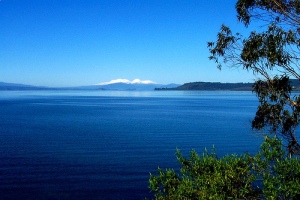
Lake Taupo is the largest lake in New Zealand, initially formed during a huge volcanic eruption over 25,000 years ago. A further massive eruption some time between 180 and 232 AD ejected so much material that it seems possible that it was responsible for the red sky that appeared over Rome and China in the time of Pliny.
A New Zealand poet, Geni Johnson, had kindly invited me to read to Taupo’s Literary & Poetry Society, Live Poets, at a restaurant in town.  There was a good audience, including a couple of people who happened to have flown in from the British Council in Shanghai (not specially to hear me, I hasten to add). A few open mike slots gave me the opportunity to hear some local poets, and they were all very appreciative of my reading.
Moving on to Australia, thanks to Oversteps poet Glen Phillips, I received a 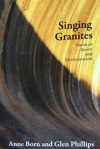 wonderful welcome in Perth. Glen was the joint author with my predecessor, Anne Born, of ‘Singing Granites: Poems of Devon and Gondwanaland‘, which was the second book I published after I took over as Managing Editor of Oversteps Books
Because of other commitments, much activity had to be packed into just one day. In the morning Glen took me to visit his research department, ‘Landscape and Literature’, at the Edith Cowan University campus at Mt Lawley. Here I met and talked to a PhD student and learned something of the work being done there.
Glen then transported me to the CTV Perth radio studio for a half-hour interview conducted by Peter Jeffery. The quality of an interview is always dependent on the skill and professionalism of the interviewer, and Peter was fantastic, putting me entirely at ease and covering a great deal in the half-hour without making me feel rushed.
 I had been invited to give a reading in the evening to the Fellowship of Australian Writers and Western Australian Poetry Inc. The meeting was to take place in the Writers’ Centre which is located in Joseph Furphy’s house. I was driven slightly out of the city to what appeared to be a deserted wood, where there was one other car parked. I approached the house down a leafy footpath with some trepidation, thinking it was a long way to travel for a tiny audience; but I was delighted, and astonished, when we opened the door, to find the room heaving with people, with not a spare seat to be seen. I have no idea where they had all come from, or where they had parked their cars, but they gave me a wonderful welcome.
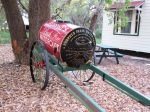
This furphy, or water carrier, stands outside the house. It was made in the nineteenth century by J Furphy & Sons, and used to transport water to animals, and also to douse bush fires – though I think this amount of water would stand little chance against the horrific bush fires that have raged over Australia recently. People tended to congregate around the water carts and chat, rather as employees do around water fountains today, which is probably why the word ‘furphy’ is used by Australians to describe an unreliable rumour. John Furphy was the brother of the Australian writer Joseph Furphy, who wrote under the pseudonym Tom Collins, and his house is preserved as a Writers’ Centre.
Not surprisingly, this distinguished audience was highly receptive and appreciative, and at the end they not only gave me a fee, but also bought all the books I had with me, which lightened my luggage for the return journey considerably. I was pleased, in the course of the evening, to include a mini-launch of Glen Phillips’ latest collection, ‘Land Whisperings’, which comprised poems he had written as part of his PhD thesis and also includes some of the poems he wrote for Singing Granites.

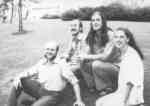
With me in this picture are Oversteps poet Professor Glen Phillips and Dr Trisha Kotai-Ewers, both of whom are former Presidents of FAWWA.
So I have good evidence that poetry is alive and well in the Antipodes. At the end of this busy, happy and interesting day I received pressing invitations to return to Perth for longer, which I’m sure I shall do at some stage in the future.
Comments closed






 nald, a fantastic jazz saxophonist and flautist; the actor and musician, Gus Garside; poet and crystallographer Robin Shirley; and me. I was lecturing in Philosophy at Surrey University at the time, but was also a poet and musician. The biographical notes that appeared in the programmes for some of our performances are at the bottom of the page, below the sample poem.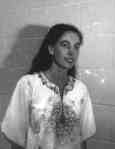
 hen came out, and for each phrase we had to determine what the probability was of its occurring, and the possibility we wished to allow for that phrase to be repeated. The skill, obviously, was in choosing the best phrases to feed in; and some of the results were strikingly good. The computer programme we used was devised by Robin using the ICL 1905F computer at the University of Surrey.
 and was followed by Bard 1D and Bard 2S.


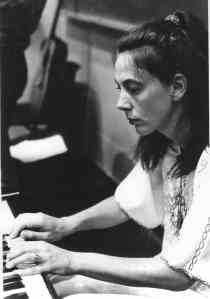 her works during our time together, including ‘Pavan for the Children of Deep Space’ and the extended group of poems in the popular suite ‘The Wheel of Seasons’. We then took all these works and jazz improvised to them, using sax, flute, guitar and bass guitar, keyboard, voice and various percussion instruments. It was all good fun.


 I had an interesting three days this last week, with Everyman at the National Theatre neatly sandwiched between a gig in which I was to be found playing the cornet as I marched down Kingsbridge Fore Street accompanying the townspeople as they danced the Floral Dance, and an open air performance of The Taming of the Shrew by Guildford Shakespeare Company. A
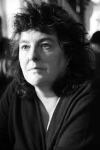 ll three were hugely enjoyable, but this blog is about the National Theatre production of ‘Everyman’ on the middle evening. The play is based on the mediaeval morality play, updated with a script written by Carol Ann Duffy.
 reography, sound and visual effects, could have been cut a little: we really had got the message by half-way through the sequence; and occasionally we lost some vital words and therefore missed a joke or punchline. But all in all it was a wonderful evening, with fine dialogue, and exciting sound and visual effects, including a terrifyingly realistic tsunami.
 God (still sweeping and cleaning) is heard to comment on how she still loves him, which is a religious message if ever there was one. But apart from that, the splendour of the performance and the strong environmental message, the play reflects in the cast and the production the rich diversity both of London, and of life.


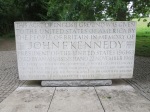 as designed by Sir Geoffrey Jellicoe. Part of the inspiration for his work is said to have been Bunyan’s Pilgrim’s Progress, and the experience of climbing up to the monument had a contemplative feeling. I found myself reflecting, sadly, not only on that crazy death, but on so many other areas of violence and killing in the world today.
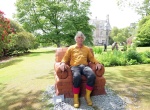 Delamore House is on the edge of Dartmoor, and is of special interest to us because it used to be owned by the same family as lived in the house that now contains our apartment. Although it is considerably grander (our house was the family’s ‘summer house’), there were similarities and common features, including a tholos, or cromlech.






 d to miss the first day of the festival, so was not in Torquay for the dramatisation of Report from Judenplatz by Sue Boyle. I am told that the presentation by John Miles and his company was professional and moving; and having seen their Under Milkwood production later in the weekend, I can believe it.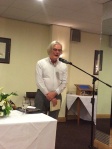
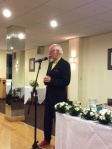 ice Riordan, and a reading on the Sunday evening by Roger McGough. These were, not surprisingly, very different events, but both were hugely enjoyable, providing food for thought as well as wine and, in the case of the supper, good food. The poetry was good, of course; but other less poetry-related aspects of their performances were also appreciated: for instance, I had not heard Maurice read before and was charmed by his Irish accent; and Roger who was, as ever, extremely amusing, sported a pair of bright red shoes.
 This year’s Torbay poetry competition was judged by R V Bailey, and at the prize-giving we were able to read the short-listed poems that were posted all round the walls, and give coloured dots to indicate where we would have awarded the prizes. The winner turned out to be Carole Bromley – a result that delighted me as I have been reading, and greatly enjoying, Carole’ poetry over the last few months.
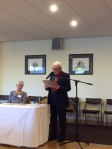 The other event that featured Rosie Bailey was a launch of the large anthology entitled ‘Love and Loss’ that she and June Hall have edited over the last year.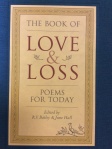
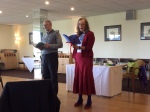


 I know the work practically word for word, I wondered whether this would be a disappointment. On the contrary, however, it was a wonderful performance, bringing out the music, humour and charm of the work.