Skip to content

Category: Uncategorized

Words by the Water 2

The sun, happily, reached the north west on Sunday, so since then we have been able to sit beside the sparkling lake – which has now returned to its proper bounds – enjoying the peace. The snow on the mountain tops has still not disappeared, so I imagine it’s still pretty chilly up there. The only sounds are the rattling woodpeckers, the lapping of gentle waves and the honking of many geese. Sometimes the geese take off in noisy panic in the middle of the night – but we are certainly not short of sleep in this deep peace.

Michael Rosen 1 reducedThe first speaker at the Theatre on the Lake on Sunday was Michael Rosen who was talking about his book ‘Alphabetical’. This was hugely enjoyable: both informative and highly amusing. The session got quite noisy as the theatre kept erupting in laughter; but in between the hilarity he presented many gems he had discovered in the course of his research. The ground covered ranged over the Phoenicians, The Grimms Brothers, Beowulf, Yiddish and the Beaker people; and such was the enjoyment all round that Michael was not able to stop, nor the audience to tire, so he ran well over time. I tried to resist buying his (rather expensive) book, but when I saw a signed copy still sitting on the book stall the next day, my resolutions melted and it is now taking up room in the van.

Charlotte Higgins 2 reducedI had heard Charlotte Higgins lecture before, on Boudicca, so went to her session on ‘Under Another Sky: The Romans in Britain’. Quite a bit of the presentation was taken up with information about the archaeologist and scholar Robin Collingwood, who was born in Coniston, and Edward Williams Byron Nicholson, the librarian at the Bodleian Library at the beginning of the twentieth century. Charlotte also talked about, and showed slides of, the Tullie House helmet discovered in 2010, which is now in the Crosby Garrett museum. Unfortunately, because single bronze items were not covered by the Treasure Act of 1996, the helmet was privately restored before being put on the open market; and even to someone with no claims to expertise in the period, it was pretty clear that the restoration was something of a catastrophe.

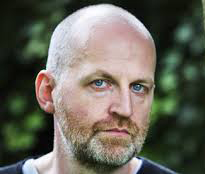
For my dose of poetry for the day I went to the reading by Don Paterson: ‘A Life in Poems’. Don Don Paterson croppedis a good poet, with a great flair for rhyme and a facility for sonnets and ballads. His strong Scottish accent allied to the soft acoustics meant some gems were missed, but it was an interesting and varied reading. I think Don probably revels in the image of a ‘grim Scot’, and there were not many giggles in the hour. His description of Dundee as so awful that in the competition for City of Culture it ‘lost to Hull’ did, however, raise a few laughs. He does not want to write in Scots as it is a dead language; and one charming piece of information I brought away with me was that there are 63 words for ‘coughing’ in Scots.
This year is the 100th anniversary of the birth of the Lakeland poet Norman Nicholson, who was born in Millom and lived in the house in which he was born for his whole life; so Sunday evening was taken up with a celebration of his life and work. Kathleen Jones has written a biography of Nicholson, ‘The Whispering Poet: A Tribute’, to coincide with this anniversary, and the talk with which she introduced the event was fascinating and charming enough to persuade anyone to buy her book.

Kathleen Jones 1 reducedKathleen showed the influence of Methodism on the poet’s development, the part played by various friends and relations, the effect of the two years Nicholson spent in a sanatorium when he contracted TB in his teens, and his passion for the environment and what would now be called ‘green issues’. After a short interval, Neil Curry, a local poet and friend of Nicholson, gave a reading and a talk for a further hour, with more information about Nicholson. Given that we’d already had nearly an hour on the poet, this second talk could, perhaps, have benefitted from being a little shorter – though Currie offered us plenty of interesting material and it was good to hear some of the poems.

The evening finished with a video extract from a 30-year-old South Bank Show on Nicholson which showed Nicholson reciting some of his poems — not to mention an extremely young-looking Melvyn Bragg introducing the programme.

Ewan Clayton 1 reducedI attended only one event on Monday: Ewan Clayton, the calligrapher, talking about his book ‘The Golden Thread: The Story of Writing’. An enthusiastic speaker with a wide range of experience and expertise made for a fascinating lecture which covered handwriting, Xerox, typewriters and fountain pens. Among the nuggets I brought away with me were the following: in 2012, there were 6.1 billion mobile ‘phone subscribers; 14 million bic pens are sold daily; fountain pen sales increased by 50% last year; in the light of recent security breaches, typewriters, instead of computers, are increasingly  being used for top secret intelligence; and it’s predicted that in 2017 50% of all computers will be tablets. Ewan was optimistic about the future of handwriting, and suggested that we should be using all the tools at our disposal, rather than favouring one or other.

A at Castlerigg 3 reduced

Then it was off to enjoy the more active delights of a Lake District bathed in warm sunshine. We walked up to the Castlerigg Stone Circle, which is reputed to be the oldest stone circle in Europe, dating from over 3000 BC. It is certainly beautiful and has a wonderful atmosphere, set on a round flat plateau and encircled by mountains.

If you look carefully, you’ll see the snowy peak of Helvellyn peeping through from behind the other hills.

Castlerigg stone circle 3 reduced

2 Comments

Words by the Water

The fact that Words by the Water is one of my favourite festivals is partly due to the fact that it always has a wonderful range of talks and readings, covering the arts, sciences, history and culture. The other reason is that we stay in the most beautiful campsite on the shore of Derwentwater, where the water laps the grass a few metres from the van and we walk across the grassy hill to the Theatre by the Lake each day.

Apres le deluge reduced wet exit reducedAh yes, ‘the water laps the grass a few metres from the van’ … That’s in a normal year. This year there was a mighty storm on our first night, and when we woke (after much buffeting through the small hours) the water was only a few feet from us, and there was a huge puddle just outside our door.

… But it was still beautiful, and we were perfectly snug in our little van.

Leaping over or sloshing through the puddles we made our way to the Theatre by the Lake and settled into the festival.

The first event was ‘A Love of Poetry’ by Louis de Bernieres. I hadn’t Louis de Bernieres reducedrealised before that this novelist also writes poetry. He spoke interestingly about his family history, and his ancestor coming over from France in the time of Louis XIV, when Protestants were being persecuted in France, and subsequently fighting on the side of William of Orange in the Battle of the Boyne.

Jolyon reducedThe festival includes some short introductory presentations of half an hour, and Jolyon Mitchell gave one of these on the subject of Martyrdom, which is the title of his most recent book. The presentation was illustrated with slides of varying horror, ranging over modern martyrs right back through history. Half an hour was unsatisfactorily short for this talk, which was, of necessity, rather rushed. However, it left us with plenty of interesting questions for reflection and discussion.

Blake MorrisonMy final treat of the first day was a reading by the poet Blake Morrison. The title of the event was ‘News that Stays News’, which was appropriate for a poet who began writing poetry years ago, went on to write prose (in particular the biographies of both his parents) and has now returned to the poetry fold. Many of his poems have a political angle and he also covered floods, coastal erosion, happiness and relations. Blake has a new collection coming out next year, but while waiting for that he has published a pamphlet of poems all of which start with the words ‘‘This poem ..’ in recognition of the fact that poets so often introduce their poems at readings with these words.

It is not possible to go to all the events in a festival as it would break the bank and render one’s Spout Force falls reducedlegs entirely useless, so we took a few hours off on Saturday to explore. We had hoped to visit Wordsworth’s house in Cockermouth, but unfortunately it was not due to open until the following day – though we did watch a wedding party arrive for their celebrations. More successful was the walk up to Spout Force waterfall, which has clearly benefitted from the months of wet weather.

Princess Michael of Kent reduced

We were back in Keswick in time for the evening presentation by Princess Michael of Kent on her historical novel, ‘The Queen of Four Kingdoms’. Rather than outlining the story of the book, Princess Michael talked fluently for an hour about the historical background to the time of Yolande of Aragon. Illustrated by a number of pictures, some of which, such as those from the Tres Riches Heures du Duc de Berry, dated from the same period, this was a fascinating introduction to a slice of French history; and it introduced some facts both about Joan of Ark and about the Battle of Agincourt, which were unfamiliar.

1 Comment

Digital communication and social media

I’ve been blogging for over a year now, and enjoying Facebook for longer; so I thought I’d offer some personal reflections on the various forms of digital communication and social media.

First, an admission: I am not, and have never been, much of a telephone person. I don’t like ‘phoning people, because it seems rude to interrupt what they’re doing just because I want to grab their attention; and although I always love to hear from my nearest and dearest family or my best friends, other ‘phone calls can be irritating if I’m concentrating on work or enjoying leisure. Also, we depend on so many cues when we talk to people face to face. We see whether they are smiling or looking fierce, we detect love or coldness in their eyes, we notice if they are giving us their full attention or tapping away at a computer at the same time. All these cues are, of course, absent when our only contact is audial. I like to be able to put out my hand and touch the person I’m talking to, if the mood takes me.

Overheard (Poetry Society)

Mobile ‘phones, of course, compound my reticence. I do possess a mobile ‘phone (or a handy, as a German friend calls it), and occasionally I turn it on; but most people find me unsocially unavailable most of the time. Those who were present at my reading at the Poetry Society AGM last Autumn may recognise this photo.

Even worse than calling someone on a mobile ‘phone is texting. I deeply dislike predictive text, and find myself challenged to the point of exasperation by trying to find the correct keys to give me the punctuation I want. I am also saddened to see young people unable to lift their eyes from their mobile ‘phones, even when stepping out into busy roads or meeting socially.

Fortunately it is possible to send text messages by Skype, using a normal computer keyboard, so I do occasionally send a text to someone’s mobile by this method. Speaking of Skype, I am more than happy with this wonderful mode of communication. It gets round several of the difficulties that result from the lack of cues mentioned above, and it has absolutely transformed the accessibility and relationships of people separated by distance.

I can remember my first astonishing experience of faxing. I was in the IT department at the university when I needed to sign a contract with one of my publishers. I had a conversation with them on the telephone, then watched in amazement as the contract was spewed out of the fax machine before my eyes. It really did seem like magic in those days before all the wonders of digital communication made us blasé. But faxes, of course, had a restricted life, as new technologies tumbled over each other, challenging us to keep abreast of the developments.

Social media explained for blog

I took to email like a duck to water. This was so much more satisfactory than telephoning without knowing how convenient one’s call was likely to be to the recipient. It was like leaving a message in their pigeon-hole at work, and trusting that they would deal with it when it suited them. Strangely, I think I had one of the first emails in the country: I was editing a journal at the time, and immediately saw the potential for publishing the articles I received, without having to re-type everything. I’ve still got that original email address, though I use some others as well, for different purposes.

In the nineties I was travelling all over the world on business, and wanted to keep in touch with my elderly mother. I therefore acquired a second-hand computer for her and set about teaching her how to use email. She must have been one of the first grey-surfers in the country, and as it was all so new and different from other forms of communication, it was quite a challenge to get to grips with it. I remember her bafflement when she finally succeeded in sending a message, and then found that it was still on her computer – ‘so it couldn’t have gone!’ I was very proud of her internet prowess, and wished there were more websites for her to visit. She would have thoroughly enjoyed the infinite possibilities for surfing that we now enjoy.

Turning to more recent social media, I have to admit that with some of them I am as much at sea as my mother was with her early incursions into emails. The two that for some reason leave me completely cold are Linked in and Twitter.

LInked in

All sorts of people invite me to be Linked in with them, and quite often, rather than offend them, I comply. That tends to mean that I am connected to all sorts of people on Linked in, whom I don’t know and am never likely to meet. This network seems to pride itself on offering some sort of business advantage, but I think there are better ways to share business ideas and contacts.

Twitter

But even worse than Linked in is Twitter. In a rash moment I accepted an invitation to join Twitter, and I know that millions of people swear by it. I am assured that it is an essential publicity tool for a writer; but I have to admit that, even after several exploratory incursions into the Twitter-realm, I still don’t get it. Apart from the fact that so many of the tweets appear to be completely inane, there is the huge practical problem of superfluity. Apparently the idea is to have as many Twitter contacts as possible, but that means
a) that there will be a constant and unstoppable stream of tweets arriving into one’s system and I certainly haven’t got time to read them all, and
b) no one is going to have time or inclination to read what I tweet either.
I’m sure that my sparse visits to Twitter (maybe once or twice a month) do not constitute the correct way to treat this miracle of mass communication; but the only way to see even a fraction of the tweets that are posted would be to leave it on all the time, which would mean one was constantly interrupted and would never get a decent day’s work done.

Unknown

Next up the hierarchy of digital communication is Facebook, and here we come to a form of social media that, once I’d got the hang of it, I found I really rather enjoyed. It is an easy and enjoyable way of staying in touch with friends and family; but it has also turned out that many  of my Facebook friends are poets, and through Facebook we inform each other of publications and publishing possibilities and share some of our work. I enjoy some of the humour that is shared on Facebook, and also turn to it to keep me abreast of the news, particularly the news that isn’t considered important by the mass communications industry. The groups within Facebook are useful for selecting who one wants to share material with, as not everything that is posted is of interest to everyone.

Sometimes people send or accept friending invitations and then are never seen on the site again. I can’t help wondering what happens to them. Is it that they read the posts but are too shy to share anything of their own lives, or do they join and then think better of it and abstain from these jolly gatherings in the market place?

Possibly the most enjoyable of these media is Blogging, because while Facebook allows posts of more substance and interest than Twitter, a blog can be quite an extended communication. Because the blogs are longer than the quick messages that characterise the other media, it’s not possible, or advisable, to follow too many. I’ve just looked to see whose blogs I follow most assiduously, and find that they are all, like myself, writers. I suppose that’s why I find them interesting. They include Anthony Wilson, Jo Bell, Kathleen Jones and Elizabeth Stott.

These reflections are, of course, entirely personal, and I mean no disrespect to those who, for instance, enjoy Twitter or use Linked in for their business interactions. And then, most of you will probably agree that at the end of the day the best social interaction is to meet someone for a walk or a drink and talk face to face.

Leave a Comment

Song of the sentimental cow, the cynical sheep and the stubborn donkey

As it has been published in various places, including in my last collection, festo: celebrating winter and Christmas, some of you will have read or heard this poem before; but putting it up as a blog seems an appropriate way to wish you all a very happy Christmas.

festo front cover

Off we go to the stable to meet some of the animals.

Microsoft Word - Cow, sheep and donkey.doc

Leave a Comment

Celebrations at the Poetry Society

Anyone who knows me will realise that admin and AGMs aren’t my cup of tea; so you will no doubt be a little surprised to hear that I had a very jolly time at the Poetry Society’s AGM earlier this week.

The venue for the evening was Keats House in Hampstead Heath. This is the house where John Keats HouseKeats lived between 1818 and 1820, and where he fell in love with the girl next door – Fanny Brawne. He wrote ‘Ode to a Nightingale’ here, though I suspect it’s many years now since a nightingale ventured this far into North London. The house is now a museum, dedicated both to the memory of Keats, and also to poetry in general, so it was entirely fitting that the Poetry Society should hold its AGM there.

We were welcomed with wine and nibbles, then Sir Stephen Irwin, the Chair of the Poetry Society, gave a very positive report of the last year at the society. It is no secret that the Poetry Society went through a rough patch a couple of years ago, but over the last year, the dedication, hard work, fortitude and good humour of the staff have pulled the society through and brought it back to full strength. All the staff are once again in place, and what  a lovely lot of people they are! The Director, Judith Palmer, who has done so much to bring the society through its difficulties, gave a report of recent activity, and the long list of events and work with young people was impressive.

With the business behind us, we replenished our glasses and then moved on to the poetry reading. Three of us had been invited to read, with an emphasis on celebration to set us thinking about the festive season ahead: R V Bailey, Dannie Abse and me.

Rosie at Poetry SocietyRosie read first, starting with a few general poems before moving on to some of her Christmas poems, which she described, with wry humour, as ‘gloomy’. One of these,  ‘At Maison Miller’, is credentials-fullin the voice of an elderly woman at the hairdresser’s trying hard to be enthusiastic about going to stay with her family for Christmas and knowing she is going to end up feeling sad and lonely. Several of the poems Rosie read, including this one, were in Credentials, the collection of her poems published by Oversteps last year.

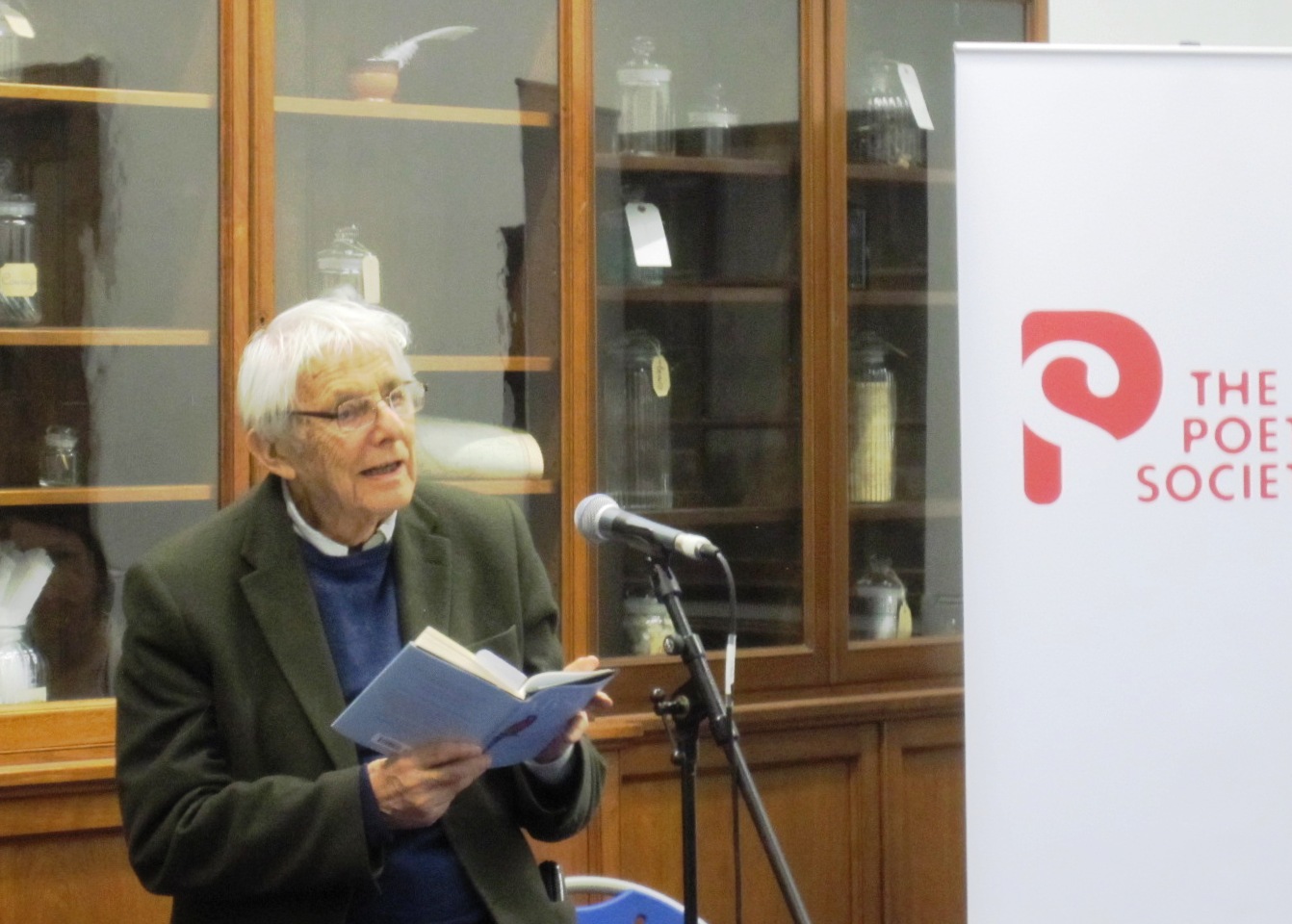
Reading at Poetry SocietyI read next, and like Rosie I began with some new pieces, festo front coverfollowed by several of the poems from my collection festo: celebrating winter and Christmas. I thoroughly enjoyed reading to this packed audience of poets who responded with such fantastic warmth and enthusiasm.
???????????????????????????????

When I was a student I went to hear Dannie Abse reading his work and remember being impressed that a practising doctor could at the same time make a name for himself as a poet. Little did I know that this same poet would be writing and performing his poetry many years later, or that I would enjoy the enormous privilege of reading with him at the celebration of his ninetieth birthday.

Dannie has lost none of his dynamism and charm, and his voice is as strong as ever. It was very fitting that after Rosie and I had been presented with huge bouquets of beautiful flowers, the lights were lowered and a birthday cake, twinkling with candles, was brought to the front for Dannie to blow out the candles before the cake was cut and shared with everyone present. As ‘the icing on the cake’ of the evening, it has to be reported that the cake was delicious.

Thank you to all at the Poetry Society for organising such a happy occasion; and thanks to the lovely audience who made it all so worthwhile. And once again, many happy returns to Dannie Abse on his ninetieth birthday.

Poetry Society 054

5 Comments

Winchester blog 5: November

After five fascinating and enjoyable months, I have come to the end of my assignment as Poet in Residence for the Winchester 10 Days festival. From July onwards I visited the city once a month, and my reflections on these visits have appeared on earlier blogs. The final spurt – the actual ten days – meant more visits to Winchester, more obvious excitements and more public appearances.

The launch of 10 Days was on 25th October, and as I was at the Torbay Poetry Festival, 2013-10-25 17.16.36 copy
I needed to travel for five hours, on four trains, to get to the launch, stay in a b&b and then return the next day. But it was worth it. There were 400 people there for the launch; and the cathedral, lit predominantly by candlelight, grew huge and seemed to float. I was able to see all the artworks in situ, and meet some of the artists I hadn’t managed to meet before.

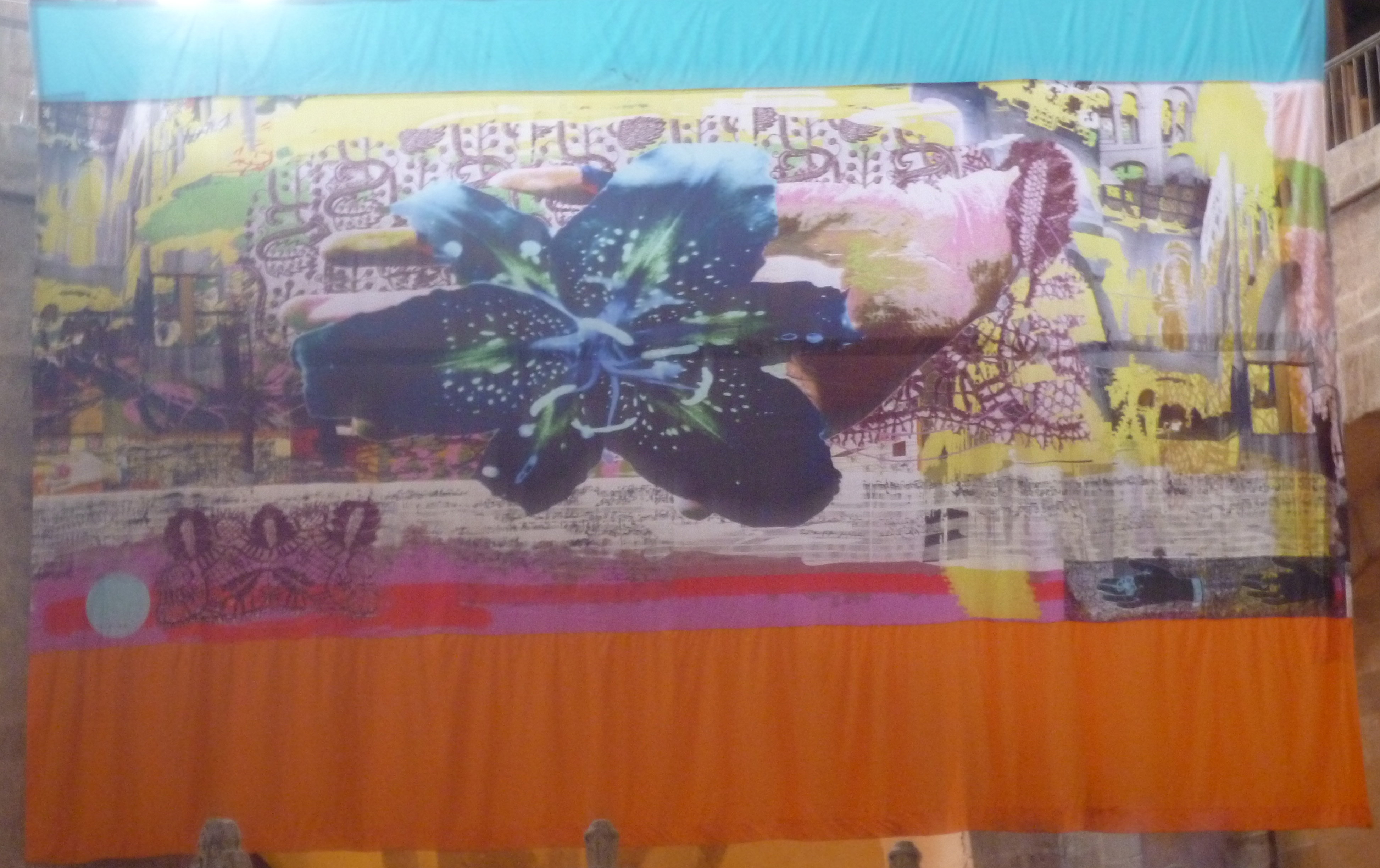
My b&b hostess was Alice Kettle, who was one of the artists exhibiting in the cathedral. We got on extremely well, and if anyone ever needs a b&b in Winchester, I would recommend that they go to her. Here is the work on which she collaborated for the exhibition.

Alice Kettle's piece cropped

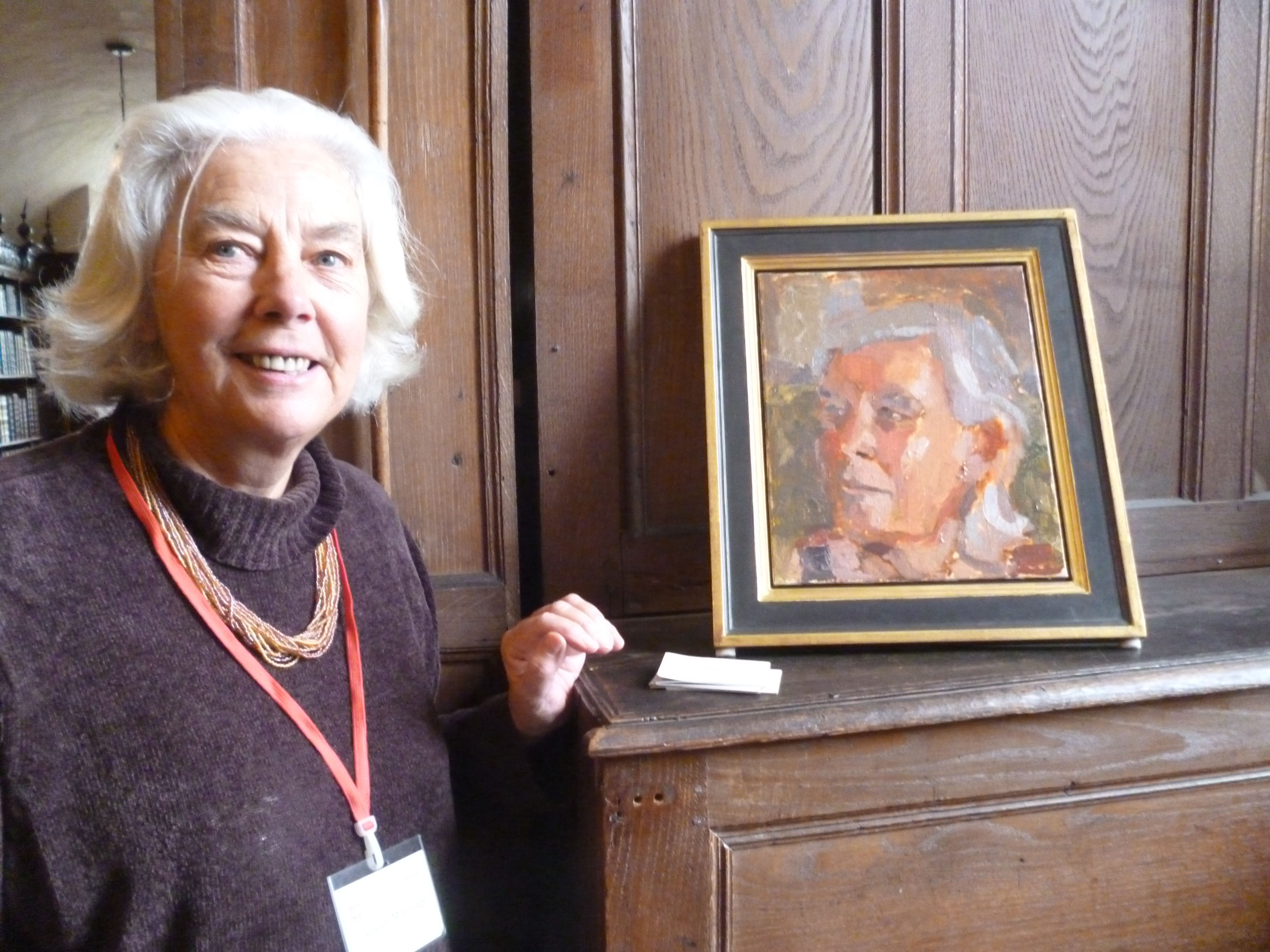
It was strange going round the cathedral and finding my poems everywhere. There was a map of the Poetry Trail for people to pick up as they went into the cathedral, but in fact it was quite difficult to miss them. Because they were all displayed so beautifully and so prominently, and also because the portrait Michael Weller painted of me was exhibited, lots of people came up to talk to me, which was fun and interesting.

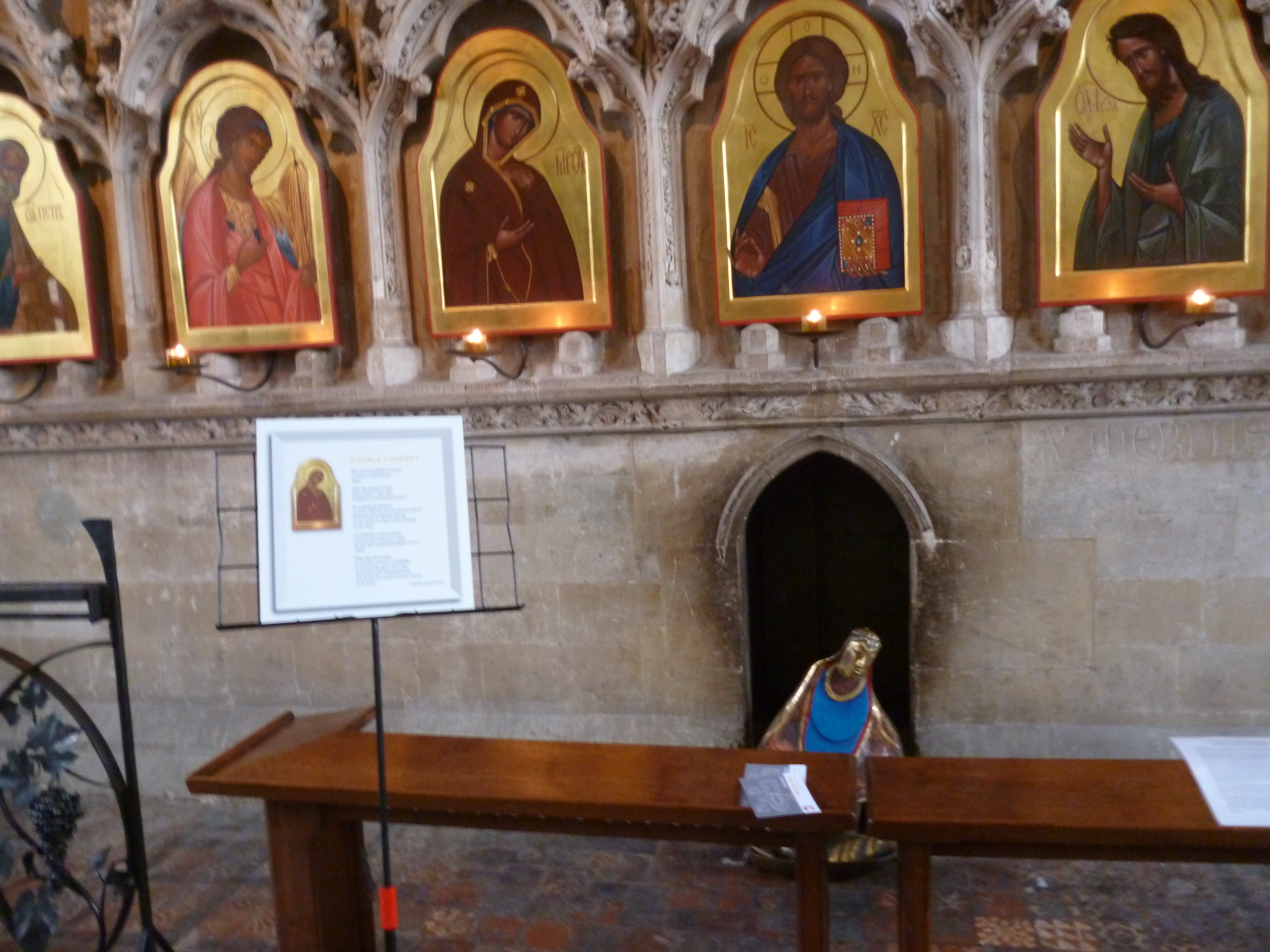
2013-10-31 10.21.43  2013-10-31 10.22.24

The poem displayed above was not written specially for the exhibition (in fact it was included in my last collection, festo), but seemed appropriate for this spot in the cathedral, just beside the Holy Hole and under the icons. A few of the other poems in the Poetry Trail were not new – and of course I wrote others while I was working in the cathedral, including one about Jane Austen’s tombstone, which is situated in the north aisle.

2013-10-31 10.36.44

Later in the ten days I did a couple of ‘walk-abouts’ in the cathedral. On one of the days there were lots of young French visitors, so I chatted to them, and I also spent time with some of the volunteers who tend the two libraries in the cathedral. They were keen to take a photo of me beside my portrait, so I succumbed.

The other two events of the week were a writing workshop, for which I took the festival theme of Creative Collisions, and then an evening performance which included a new piece by June Boyce-Tillman, a poetry reading by me and finally a discussion with some of the artists with whom I had been collaborating. This was very ably chaired by Stephen Boyce, who set all of us at ease and elicited comments and questions from the audience. The artists who shared in this were Lisa Earley, Sue Wood, Lucy Cass and Penny Burnfield.

2013-10-31 12.48.43

I’ve covered some of these in earlier blogs, so
I’ll just include Penny’s beautiful piece here. Penny used silhouettes of members of her family on the hangings, and then inscribed some of the words from the surrounding monuments over them. The poem I wrote to accompany this piece is called ‘Retrospective’. I wrote it before I met Penny, and it was wonderful how what she had in mind when she was creating the piece and what I wrote for her should have chimed so well together. My  poem will now travel with Penny’s artwork when it is exhibited elsewhere.

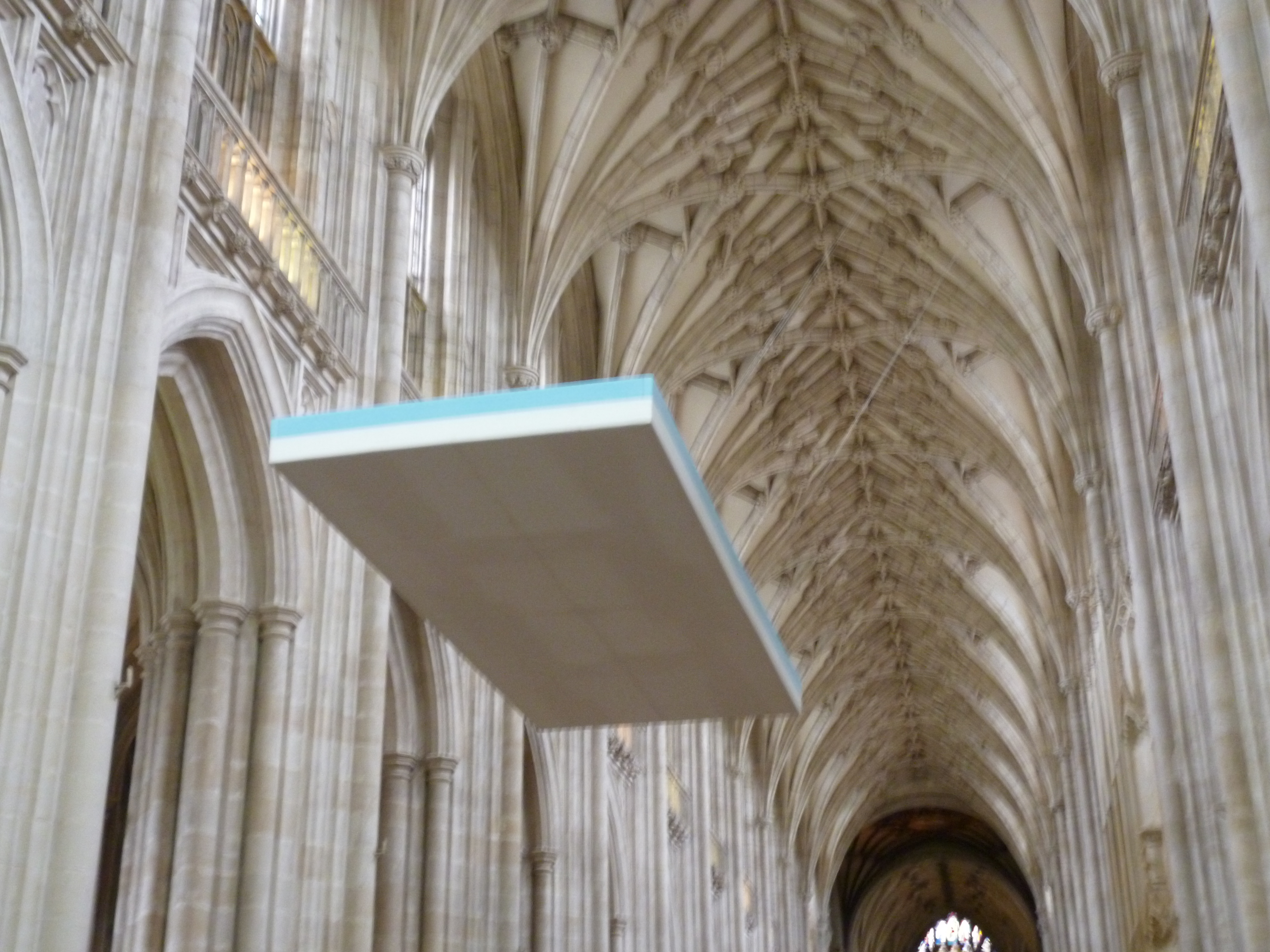
The last of the works of art I was asked to respond to was a dramatic piece by Anna Sikorska entitled ‘You are very near to us’. It was a huge float, suspended from the ceiling of the cathedral, and was situated at the back end of the nave. This poem had to be written rather quickly before I went off on holiday, so that the printing could be done while I was away. Initially I thought I was going to be stumped by this one, but then the poem, ‘Transition’, came to me, and I even managed to get in all the various themes that Anna suggested to me by email. Normally I go back to edit poems before launching them out into the world, but that wasn’t possible in the time-frame we had available. In view of this, I’m much relieved that all the poems seemed to work out fine, and were greatly appreciated. Whew!

float      2013-10-31 11.36.39

Quite a number of people have requested that there should be a publication so that they can have copies of the poems. The organisers of the festival are keen to do this, but whether it happens or not depends (as so often) on finance. If it does, I’d like to include all the artworks, with my poems on the opposite pages. The festival photographer, Joe Low, has plenty of super photos of everything that went on at the festival. This publication might well not be possible, but if it does come off, I’ll post something to let you know.

I’m immensely grateful to the organisers of the 10 Days Festival for giving me the opportunity to work in this amazing building with such lovely artists. Thanks, too, to all those artists, whose warmth and appreciation made the task so richly fulfilling.

The next poetry excitement for me is reading with Dannie Abse and R V Bailey at the Poetry Society’s AGM. More news anon.

4 Comments

7 Maltese (K)nights

in Orta reducedNormally early October brings the delights of the Poetry on the Lake Festival at Orta in Italy. Like a number of others, I first attended this festival when I was successful in one of their competitions – and then became addicted. This year, because of other potential arrangements, I wasn’t able to commit to Orta in advance, so decided to take a break from my normal pattern of revising my rudimentary Italian and heading south in the camper van as soon as the first whiff of autumn blew in my direction.

The expected appointments didn’t materialise, so at the last minute we made a booking to join our grandchildren and their parents for a half-term holiday week in Malta, which we had never visited before. The weather was perfect all week with temperatures in the mid-30s, and the sea was deliciously warm, so we enjoyed the luxury of swimming several times a day as well as visiting some of the interesting sites on the islands. And, of course, we had lots of fun with the lovely family. We had also made some new friends earlier this year, and it turned out that they are Maltese and spend quite a bit of time back there; so we were able to spend two happy days with them as well.

Museum reduced

One of the striking features of Malta is the pale honey-coloured limestone which is quarried on the island, and from which everything, from ornate cathedral to humble dwelling, is built. It gives a gentle relaxed feel to the towns, and looks beautiful from the air. Like our sandstone in places like Lindisfarne, the stone is soft enough to be sculpted by the elements, and takes on fascinating decorative patterns as parts are worn away.

Of course, much of the history of Malta revolves round the Knights of St John. Like so much other history this tends to be rather macho and it’s sometimes tempting to think that the islands were uninhabited by women. However, the knights have left behind some beautiful cathedrals and churches. Like so much from this Baroque era, the insides of these buildings are incredibly ornate, and on entering Valetta Cathedral one is almost dazzled by the extensive gold. But most of it is not as over-the-top as one might have expected. I’ve seen far more excessive Baroque buildings in other countries, especially in Spain, Austria and Brazil. My taste in ecclesiastical architecture normally tends towards the simplicity and grace of the Romanesque; but on this occasion to my surprise, I actually liked much of what I saw, especially in Valetta Cathedral.

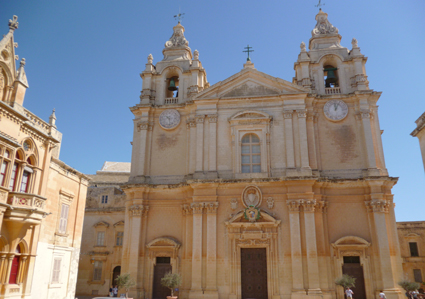
Mdina cathedral reduced

The picture on the right is of Mdina Cathedral. Mdina is a beautiful city, surrounded by walls and is so much of a piece that it feels extremely harmonious. It is, of course, highly preserved for tourists, but also seems to operate as a real place as well.

Another impressive church building was in Mosta, which has a huge dome, said to be either the third or the fourth largest in the world. Mosta dome reduced

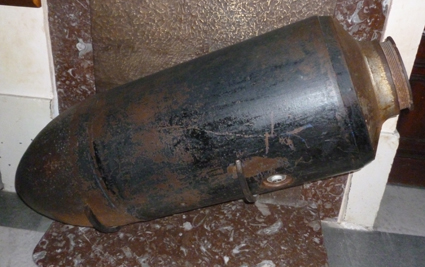
Bomb

Apparently the inhabitants of the town were all sheltering in this church in the war, when a bomb was dropped and fell straight through the dome and down to where all the people were. By an amazing stroke of good fortune, or what many would call a miracle, the bomb did not explode and nobody was hurt. A replica of that bomb is now on display in the church. Malta suffered terribly during the war, and the whole island was awarded the George Cross by King George VI.

The friend we spent some time with was a child in the war and remembers it quite clearly. The experiences of the Maltese people came alive so vividly for us as he talked: in particular his stories of how his family spent the nights down a large well for safety, and how one uncle who decided he’d had enough of that left the well one night and was killed.

Moving further back in history, St Paul was shipwrecked on Malta, and we passed St Paul’s Island when we took the boat to Comino and Gozo on what turned out to be the only day when the wind got up. It was still sunny and warm, but the seas became pretty rough, and gave us a taste of what St Paul might have experienced a couple of thousand years ago. The story goes that when St Paul landed, he had an unfortunate encounter with a viper, so the locals all expected him to keel over and die. Instead of that, however, he simply shook the viper off into the fire.
Once safely on shore, we found out that the island was called Malta. The islanders showed us unusual kindness. They built a fire and welcomed us all because it was raining and cold. Paul gathered a pile of brushwood and, as he put it on the fire, a viper, driven out by the heat, fastened itself on his hand. When the islanders saw the snake hanging from his hand, they said to each other, “This man must be a murderer; for though he escaped from the sea, the goddess Justice has not allowed him to live.” But Paul shook the snake off into the fire and suffered no ill effects. The people expected him to swell up or suddenly fall dead; but after waiting a long time and seeing nothing unusual happen to him, they changed their minds and said he was a god. (Acts of the Apostles chapter 28).

St Paul reducedThere’s a large statue of St Paul and the viper outside the church in Mellieha (see right).

Unknown

The other treatment of this theme, which I’ve always loved, can be found in St Anselm’s Chapel in Canterbury Cathedral, where the twelfth century artist captures so much of the movement and drama and of the story.

Travelling even further back into history, Malta has some rather impressive pre-historic temples, which are far older than Stonehenge. As with many such early structures in Britain and France, they appear to be aligned in such a way that the sun striking certain stones marks the solstices and equinoxes, thus giving shape to the year and guiding the timing of agricultural activities.

A in templetemple stones

3 Comments

Winchester blog 4: October

imagee1358a

I’ve now made my last visit to Winchester before the Festival starts in earnest at the end of this month. This visit was to finalise the venues and formats for all my poems that form the Poetry Trail through the Cathedral, and then to meet Stephen Boyce to make plans for my Poetry Reading on the evening of November 1st.

My next blog will probably be on something completely unconnected with the Winchester Festival, but after that I hope to be able to post a final Winchester blog with lots of pictures of the various artworks in situ. The Cathedral is going to be bursting with new and interesting art in the festival, as is the whole city of Winchester. If you can possibly get there between 26th October and 3rd November, I highly recommend a visit.

Festival map

As on all the other days I’ve made preparatory visits to Winchester over the last few months, the weather was beautiful and I was able to sit on a bench in the peaceful Cathedral Green to eat my sandwich. I then wandered round the side of the cathedral, to visit the Barbara Hepworth sculpture of the Crucifixion. I’ve always loved this piece: it’s one of three casts, and was originally situated against a backdrop of the sea in St Ives, down in Cornwall. The autumn leaves were drifting gently down, there was no sound of traffic and the great ancient cathedral formed a fitting backdrop to the colour and quiet drama of Hepworth’s sculpture.

P1020612

It has been a very stimulating and enjoyable process working with the artists who will be represented in the Cathedral during the 10 days Festival, including Sue Wood, Lisa Earley, Michael Weller, Lucy Cass, Penny Burnfield and Anna Sikorska. It was easier when I could meet the artists, particularly if I could see something of what they were working on for the Festival. The two poems that came most easily were Listen, for Sue Wood’s sound installation in the Triforium and Sitting for a Portrait to go with Michael Weller’s paintings in the Morley Library. It’s not so very surprising that this latter poem came quite easily, given that I had hours to think about little else as I sat while he painted my portrait.

The most difficult poems to write were those for which I hadn’t met the artist and didn’t have a very clear idea of what the finished artwork was going to look like. The last poem I was asked to produce for the Trail was in response to a huge polystyrene float that will be suspended above the nave. The work is to be called ‘You are very near to us’; and the artist Anna Sikorska sent the following guidance:

The title of the swimming float, lowered through the roof, hovering and waiting, was overheard at the Cathedral as a response to intercessions. It is part of a body of work describing and playing with surfaces and substance, particularly in this case the chalk of the surrounding land, thinking about directness, cleanliness and simply the desire to reach and bubble upwards.
Mark 2.4  (also Acts 10.11 although this is just a coincidence and was not inspiration for the work).
The chalk lands of Winchester and surrounding areas.
Being underwater, and looking/rising up
Place.
He saw heaven opened and something like a large sheet being let down to earth by its four corners.  (Acts 10 v 11).

All that presented something of a challenge, but I’m glad to say that after several attempts I did manage to reflect most of these themes in the poem, though with its final focus on music, it turned out to be about something very different from what I first anticipated. One strange result is that this piece is the only one of the poems that has a recognisably religious theme, as it reflects on some of the difficulties of prayer. I am told that this particular artwork is likely to be the most controversial, so it’s rather fun that it should turn out this way. I’d like to include a picture of the float here, but as it’s not finished yet, that will have to wait until my next Winchester blog in November.

There will be maps showing the positions of my poems in the Poetry Trail just inside the Cathedral, and Lucy Cass has produced a series of postcards of some of my poems alongside photographs of her artworks. I shall be doing a couple of ‘walk-abouts’ in the Cathedral in the second week, and running a poetry reading and writing workshop at 2.00pm on Thursday 31st October. You need to book for this workshop, but it is free.

Then on Friday 1st November I shall be giving a Poetry Reading in the Epiphany Chapel at 7.00pm. At this event, the musician/performer June-Boyce-Tillman will give a short performance before I read, and afterwards Stephen Boyce will chair a conversation with me and some of the artists with whom I’ve been working. We will talk about our collaboration, and invite comments and discussion with the audience. Do join us if you can.

There is going to be SO much going on during this 10 Days Festival. You certainly won’t be able to get to everything, but I do urge you to try to visit Winchester at least once during the ten days.

10 days header banner

5 Comments

Winchester blog 3: September

10 days header banner

The last month has seen more exciting challenges on the Winchester Poet in Residence front.
I had a message from the organisers asking if they could set up a trail of my poems round the cathedral, with a map showing where each one is situated. It was suggested that as it’s a 10 Day Festival, it would be appropriate to have a trail of ten poems. At that stage I had written only four, so I took a deep breath and started to write more and also to look through my files to see what existing poems I had that might be suitable. Last week I met Trish Bould, the Creative Director of the festival, in the cathedral to discuss where they should all go, and to plan the route for the trail. I have at least three more poems to produce, in response to some more of the artists, and will do my best to come up with something suitable. There are a couple of points in the Trail that will have more than one of my poems as part of the same installation.

Lisa in Barcelona '13My poems for the Fishermen’s Chapel are now finished and incorporated into the artwork by Lisa Earley (pictured left). This chapel contains the attractive altar shown below, and also a memorial to Izaak Walton, who wrote ‘The Complete Angler’. Both Lisa and I are concentrating on the working people who go to sea to catch fish for us to eat, rather than leisure anglers who sit beside rivers with fishing rods.

Lisa had already started working on my poem Those who go down to the sea when I last visited the cathedral. This poem was recently published in the anthology about the sea published by Grey Hen Press, ‘Running before the wind’, and it seemed a suitable choice for a chapel dedicated to those who work in the challenging conditions of sea fishing.

 Those who go down to the sea

They hardly ever cross my mind,
certainly never keep me awake
and tossing through the dark hours of the night

wondering if they’ll make it
or whether this time the fury of the open seas
will overwhelm the frailty of their vessel.

Even when I eat fresh fish,
the costly silver harvest
torn from the thundering waves,

I can continue a conversation
as if the delicacy placed before me
had been casually plucked from a bush

by a land-lubber
pausing in a cottage garden
on the way home for tea, unaware

of the raw flesh and watering eyes,
the constant taste of salt,
of fear.

???????????????????????????????

Lisa asked if I would write another poem for her, bringing in the ripples that figure in her installation, and also alluding to the fact that fisherfolk have for centuries made pilgrimages to this chapel in Winchester Cathedral. I therefore wrote a new poem entitled Ripples that will also be incorporated into Lisa’s work and displayed in the Fishermen’s Chapel. Lisa’s plans for the chapel sound really exciting, using textiles to suggest nets with fish that gradually morph into footsteps; and she’ll be using bits of my poems in the installation. I look forward to seeing the finished pieces.

img291ad1FINAL The next artist with whom I was invited to collaborate is Lucy Cass, a recent graduate from Winchester University College of Art. Lucy works with acrylic and resin to produce amazing pieces of sculpture such as this one. This piece will (all being well) be the inspiration for my next poem for the Poetry Trail. The Muse, however, can be remarkably fickle, especially when deadlines are approaching, with the result that all sorts of poems are now competing for my attention. One of the most recent, written at 4.00am on the morning after my visit, was a rather feminist poem inspired by Jane Austen’s tombstone in the cathedral; but as I’m limiting myself to 10, I don’t think that will make it into the final selection.

Lucy is also designing and producing four postcards that incorporate some of her images and some of my poems from the project, and these will be available at various venues in Winchester during the festival.

One of my commitments during the actual week of the festival is a poetry reading in the cathedral on the evening of Friday 1st November. As this event will start with a short performance by the musician June Boyce-Tillman, I had a meeting with her to discuss our plans for the event. After June’s piece, I’ll give my reading, and the evening will conclude with discussion with the poets with whom I’ve been collaborating about our experiences of the process. The Arts Adviser for the festival, Stephen Boyce, will chair this event.

I concluded my visit to Winchester last week by attending a poetry reading by four poets in the Winchester Discovery Centre. Three of the poets had been shortlisted for the TS Eliot Prize recently: Annie Freud, David Harsent and Daljit Nagra; and they were joined by the aforementioned Stephen Boyce, as a representative of local Hampshire poets. All the poets gave good readings.

I’ve got more artists to meet and more poems to write, so there’s no time to waste. The dates of the 10 Day Festival are approaching fast: 25th October to 3rd November.

1 Comment

Winchester blog 2: August

10 days header banner

I spent another day in Winchester as Poet in Residence for the Winchester 10 Days Festival, and once again the sun shone and the city was buzzing with life.

Brassey Road Studio 1The artist, Michael Weller, had asked if he could paint another portrait of me, so I sat for him in his studio at Brassey Road in the morning. The studio, which is shared with various artists, is light and airy, and Michael had selected some recordings of poetry readings to play to me while I sat for him. They included many well-known poems, and a few that I hadn’t come across before. It is extremely rare to get the opportunity to sit for two and a half hours doing nothing but listen to poetry, and the time passed quite quickly. This portrait, in any case, took less time than the last.

???????????????????????????????

Once again I didn’t see the painting until it was finished. It is very different from the first one, and I’d be interested to know which people think is the best. I prefer this one, which I think captures my eyes better, but one of my daughters thinks the colour is better in the first. I’ll put the two together (chatting to each other?) at the bottom of this blog, so that you can judge for yourselves. I hope some of you will respond with your considered judgement, as I think the artist would appreciate some feed-back.

In the afternoon I spent some time with two of the other artists with whom I’m working in preparation for the festival. Sue Wood is preparing a sound art installation, for which I have written a poem; and she has now made this into a poster to display as part of her installation in the Triforium. As it describes the project, I’ll include it here in full:

  Listen
  Sound installation in Winchester Triforium

Listen! you probably won’t hear
monks chanting plainsong in the choir
– there are no monks –

nor pad of ghostly feet ascending
and descending night stairs linking
their dormitory and prayer.

If you’re standing, your ears are on are a level                  Triforium arch
with other visitors talking face to face,
admiring the purity of the exquisite arches;

and if you were to lie down on
the stone floor, monk-like
prostrate yourself, perhaps your ears

would pick up faint reverberations
of passing feet, as a rabbit
bends her ear to catch

vibrations of dog or human
through the earth. But better still,
if you sit awhile, here on this bench,

and close your eyes, your inner ear
will start to catch a rich
cacophony of sounds:

perhaps the clank of workmen
mounting and dismounting
exhibitions,

a mobile telephone that somebody
forgot to turn off, tinkling an inane
tune deep within a pocket,

the drone of a deep authoritative voice
explaining the iconography
of early English architecture,

a girl and boy who’ve found a quiet
corner in which to hide and whisper
secrets of human love and beauty,

the organ playing far away,
footsteps on stone steps, the muffled cry
of a baby, filtered through the stone.

Then in that stillness you may become aware
of the music of your own life-giving
breath, the spirit within, as when

on a still blue summer’s evening
you hear the beat of swallows’ wings
as they fly overhead

and realise that what you’re hearing
is the sound of flight.
That’s right: just pause awhile and listen.

After leaving Sue in the Triforium I peeped into the Morley Library where my portrait will be exhibited during the festival, spent a few precious moments in the cathedral library poring over the beautiful Winchester Bible pages on display, then went downstairs to the Fishermen’s Chapel to meet Lisa Earley. Lisa is a textile artist, and she’s got some exciting plans for our collaboration. She’s already using one of my poems, and I might well write another for her.

I’ll write about Sue’s ideas and the development of her art work in my next blog. There are still some more artists I need to meet, and quite a few more poems that need to be written.

Finally, here are the two portraits. Which do you prefer?

???????????????????????????????


8 Comments