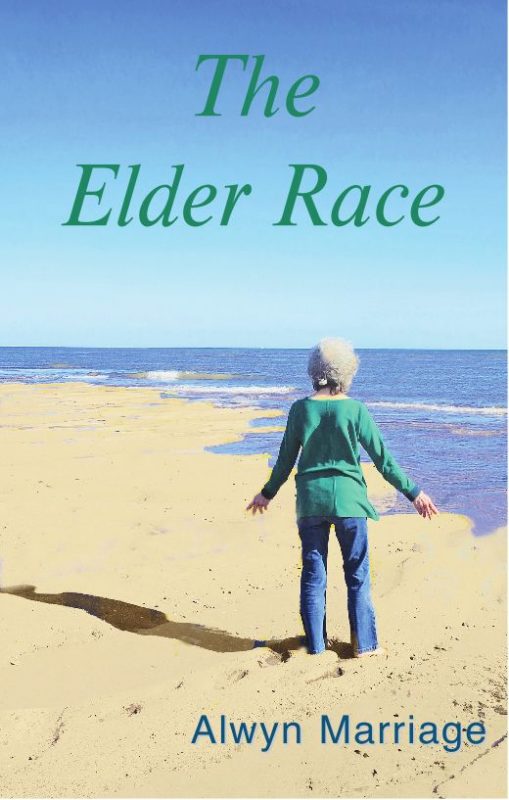
There is an ancient church near where I live, parts of which date from Saxon times. It is the oldest building i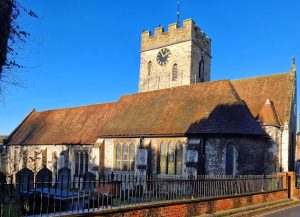 n the town, even older than the castle that stands up the hill above it. It started life, of course, as a Roman Catholic church, became Anglican at the Reformation and in 2013 combined with the local Methodist church to form a joint congregation, at which point it underwent extensive renovation that rendered it even more beautiful and significantly more useful for a wide variety of activities.
I didn’t know before last year, that the Methodist Church, under the umbrella of the Methodist Modern Art Collection (MMAC), has one of the finest collections of modern religious art in the world, and it lends out works from their collection to cathedrals, art galleries and churches that would like to mount exhibitions. There was, not surprisingly, great excitement in the town when we were granted permission to display 25 of their world-class works of the art for four weeks in Lent, from 9th March to 5th April 2026.
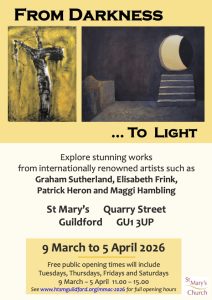
I was privileged to be commissioned to write a series of poems to accompany all the art works, and so inspired was I by the project that I produced all 25 poems in the space of two months. It really seemed like a project specially made for me, bringing together my passion for poetry and art and my love of the spiritual.
It was planned to put on a number of public events during the exhibition, and I was invited to present an evening reading of some of the poems. I therefore invited the ‘cellist, Annelies Terry, to share this recital with me and we put together a programme of poetry and music to be performed on 20th March 2026.
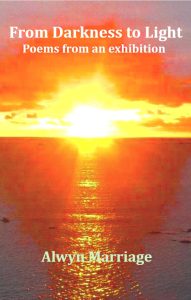 The organisers of the exhibition liked what I had written and decided to find ways in which the poems could be exhibited with the paintings. They also suggested that I should produce a book containing all the poems alongside high resolution reproductions of all the paintings, and this was published in February 2026.
It was decided to keep the price of the book down to just £10, so that as many people as possible could purchase it.
If you would like to order a copy for £12.50 including p&p, please contact me through <marriages.me.uk/alwyn/contact>.
We also prepared a Powerpoint presentation to run on a loop at a couple of positions at the exhibition.
A further excitement arose when the composer, Joanna Forbes L’Estrange, was commissioned to write a motet for SATB choir and ‘cello, based on the words of my short poem ‘ Mothered’. This is the poem I wrote in response to the beautiful painting of the ‘Dalit Madonna’ by the Indian artist Jyoti Sahi. It was decided that the world premiere of this work should form part of ‘Shadows of the Cross – a Palm Sunday Reflection’ on 29th March 2026.
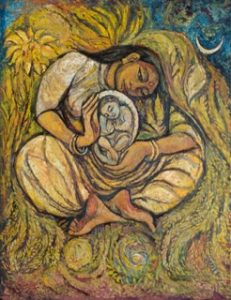 Mothered
As the kernel within
an ear of corn
As alcohol within
the wine
As a pearl within
the oyster
As the poor within
the kingdom of heaven
As God within
a woman’s womb
So is my life within
the heart of God.
MMAC then asked if I would prepare a digital ‘exhibition’, or curation, of some of the poems and paintings plus my own reflections on them, to be displayed on the ArtUK website. This is now live on their website at <https://artuk.org/discover/curations/from-paint-to-poetry-twelve-works-from-the-methodist-modern-art-collection>.
In my experience, poetry does not normally receive such a high level of publicity, and this range of events has led to further invitations to read and talk about my work. But the best part of it all is that hundreds, or possibly thousands, of people will be visiting the beautiful church of St Mary during Lent, and will be looking at and reflecting on some of the greatest religious art of the last century.
So if you happen to be within striking distance of Guildford between 9th March and 5th April, do come along to St Mary’ church in Quarry Street to enjoy stunning paintings by artists such as Graham Sutherland, Elisabeth Frink, Patrick Heron and Maggi Hambling, along with some lesser-known works by artists from India and Africa. This really is an occasion not to be missed.
.
Comments closed
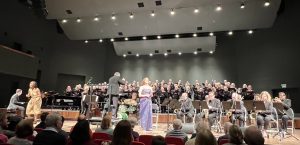 I have always said that I adore all dance, with the single exception of tap dance; but following this Duke Ellington concert I have had to adjust my position and abandon my prejudice, because the tap dancer, Annette Walker, was nothing short of phenomenal. Interpreting several of the movements, she brought what was already a superb performance to glittering life, with dance that, while it was certainly tap dance, also often appeared to be akin to contemporary dance. One of the movements was entitled ‘David danced’, in which the chorus, jazz band and tap dance melded beautifully; but we were treated to her exquisite interpretations in several other movements as well.
 The All Stars Jazz Band underscored and held the evening together with skill and verve. Members of the band were Colin Skinner (Lead alto sax), Alan Barnes (Alto sax / clarinet) Robert Fowler (Tenor sax), Karen Sharp (baritone sax), Steve Waterman (1st trumpet), Freddie Gavita (2nd trumpet), Ian Bateman (1st trombone), Paul Sykes (2nd trombone), Rob Barron (piano), Marianne Windham (bass) and Clark Tracey (drums). I mention them by name because each was worthy of note, and raised the temperature of the evening with their solo passages.
 The first dance was ‘Ripple’, an hypnotically lyrical piece choreographed by Xie Xin. In this dance, the dancers became the sea, constantly moving, swelling and subsiding, especially through the movement of their arms. Although quite a bit of the dance was scored for the whole troupe, there were several duets, in which a hand would reach out towards the partner’s hand, only to be retracted before they could touch.
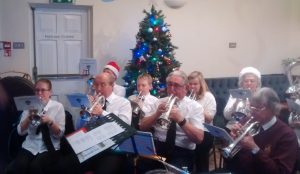
 I was never particularly keen on brass instruments until I met the man who was destined to be my husband. To my delight, he actually serenaded me on his trumpet with Caro mio bien, … and my life was changed for ever.
 the band’s cup for the player who had made the most improvement; but I’m sure that was only because I had started from such a low base!
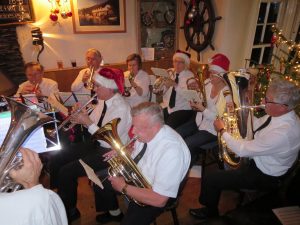 for us to play carols at pubs, open air gatherings and the local nativity play; and in summer, we expended all the breath we didn’t know we had, by processing
 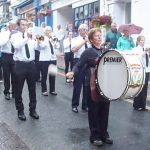 down Fore Street from top to bottom playing the Floral Dance (ad infinitum), while the rest of the town danced along in their festive clothes behind us. This is generally great fun, though the year we had to do this in pouring rain took slightly more determination. More
 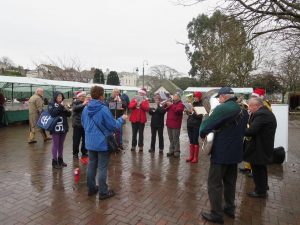 restfully, we played each summer for an open-air service at Hope Cove, put on by the Methodist church; in November we normally do our civic duty by playing for the Remembrance Day Parade; and we perform in the bandstand in Kingsbridge on various occasions.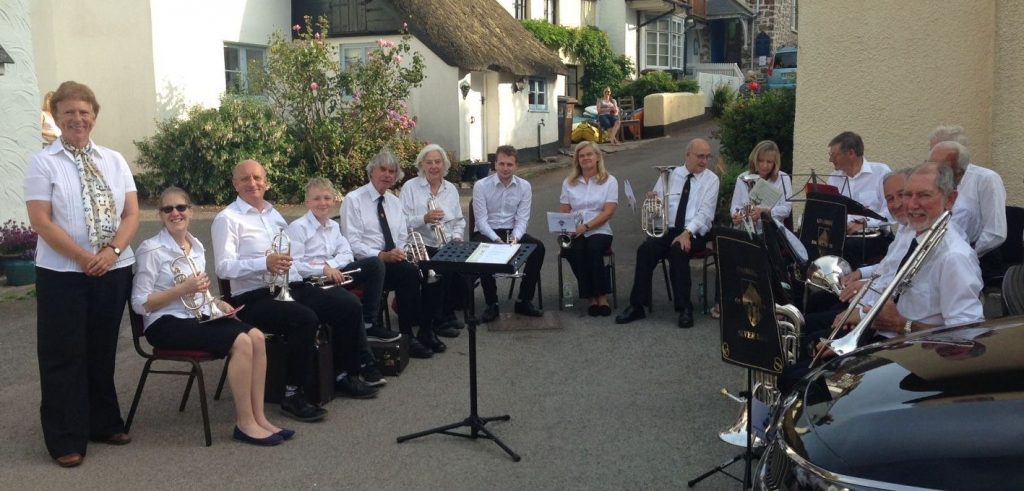
 residents; and some of them have been in the band for more decades than one could imagine (over 70 years in one case!). The age range has therefore been between 12 and 90 plus.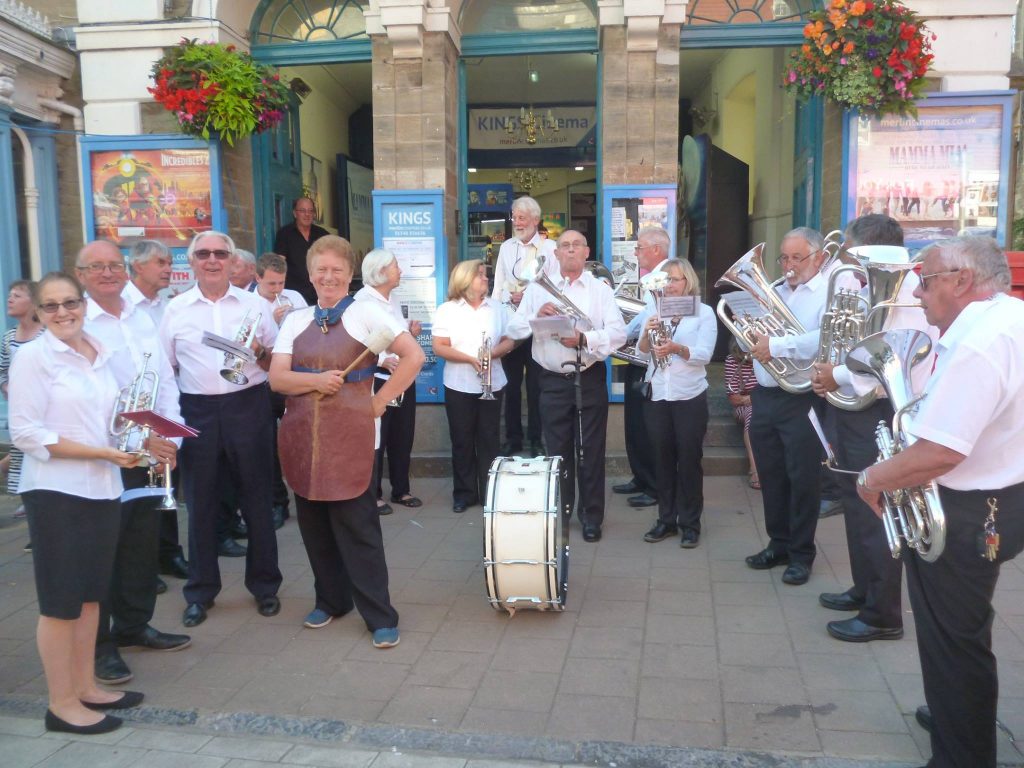

 and a fascinating project entitled ‘New York Beautification Project’, in which she painted tiny, perfectly-executed graffiti cameos on items all around the streets of New York, intentionally confining herself to sites on which she did not have permission to paint her work. Here are some examples of the paintings with which she ‘beautified’ some items that are normally considered ugly.


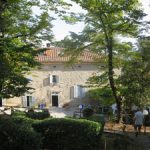 The first wasn’t, strictly, a festival but a Ways with Words house party at Villa Pia, a beautiful old house in Italy. My reason for going was that I had never been able to get to one of these holidays before, and it was advertised that this would definitely be the last one. Sadly, Kay Dunbar, who with her husband Steve Bristow has been the instigator, organiser and inspiration behind these residential literary holidays, is unwell and
 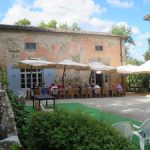 therefore unable to continue in the rôle she has so ably filled for nearly twenty years. Several of the guests had been back year after year, some staying for two weeks, rather than the one we managed.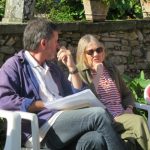
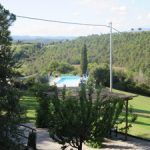
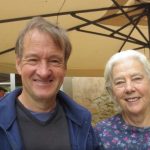 There was a writer in residence, Mark McCrum, who was generous with his time and encouragement; there were Italian lessons on offer, and there was a day trip to San Sepulchro. Apart from those pleasures, there was time to relax (and in my case to get some writing done), beautiful countryside to explore, a deliciously warm swimming pool and fantastic food. There was, naturally, some sadness that such a lovely annual event was coming to an end – but I was just pleased that I’d finally managed to make it at the eleventh hour.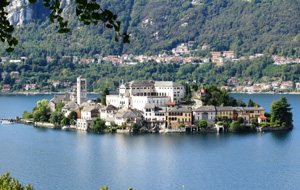
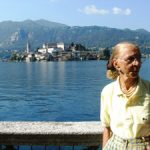 , unlike most other poetry festivals, it is not primarily a public event, though we are always pleased to see the delightful Countess who comes to listen to us each year.
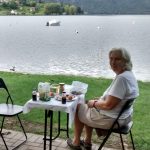
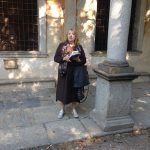 one, and this was even announced in a poetry magazine over the summer. When questioned, however, the festival organiser, Gabriel Griffin, prevaricated. No, the format would not be repeated in future, and there would certainly not be another competition. But maybe, just maybe, it was just possible that something different might happen. Who knows? But even if it does not continue, many of us have hugely enjoyed returning to Orta each year and meeting up with poets who have become firm friends.
 I was one of the poets reading for the launch of Coast to Coast to Coast at Aldeburgh, for which a number of us wrote poems from locations all around the coast of the British Isles. The resulting reading gave a beautiful feeling of embracing the whole of these islands. My own poem was written on
 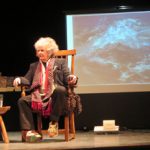 artist and sculptor Maggie Hamlyn, who stepped in at the last minute when Gillian Beer was unwell. The Ambit cocktail party was also highly enjoyable, giving the opportunity to catch up with people who most of the time were rushing from one event to another.
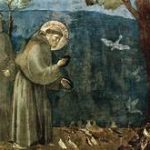
 Nowhere else can one find so many frescoes by Giotto and Cimabue and I could (and do when possible) spend many hours contemplating the vision of these artists. This does not mean, however, that I am entirely uncritical of the treatment of all the subjects portrayed.
 initially living a life of pleasure and ease, Francis had an epiphany that caused him to give up all worldly wealth and privilege to become a humble friar. It may well be that he appeared at a point in history when his message was needed, and he simply ignited a fuse that was ready to burst into life; but he was also clearly a charismatic character, who quickly attracted huge numbers of followers and gradually formed what became known as the Franciscan Order. As is often the case with these special personalities, stories accrued around the basic facts of his life, and a number of miracles were ascribed to him both during his lifetime and afterwards.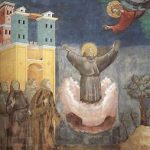
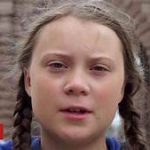 And, as I have mentioned, it is nothing short of a miracle that a young teenager can motivate so many people all around the world, to rise up and demand action on climate change, and can also be invited to meet some of the movers and shakers of the world and speak with authority at international events.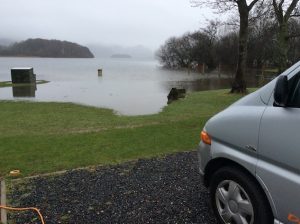
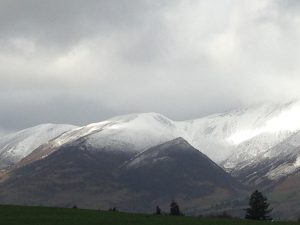
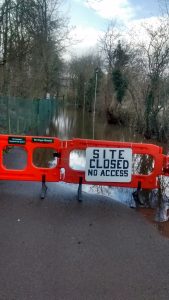 but as we had been watching the film of Oscar Wilde, with our mobile ‘phones turned off, we hadn’t received the message asking us to head for dry land. We drove out and found a quiet spot beside the road on higher ground, where we enjoyed a peaceful night’s sleep. The next day we booked into a b&b for the rest of the week, which was just as well as the campsite had still not re-opened by the time we left. By then, not only was the campsite underwater, but most of the surrounding fields and woodland.
 ‘There is no Planet B’. The well-researched information in his talk could not fail to shock, but he also found a way to offer at least some hope that all is not yet lost – as long as we all take the threat extremely seriously, and act now to save the planet.
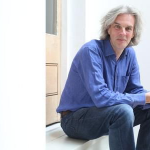 Peter Sanford appeared in the main theatre to give a talk entitled ‘Angelology’. Peter is a gifted lecturer and held us spellbound as he explored the history and mythology of belief in angels. He quoted the surprising statistic that one in ten Britons claims to have experienced the presence of an angel. It would appear that many of these people believe in ‘guardian angels’, rather than in the more general, and more interesting idea of angels being messengers from God.
 Marcus du Sautoy Melissa Benn
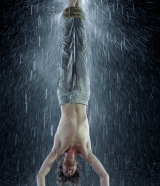
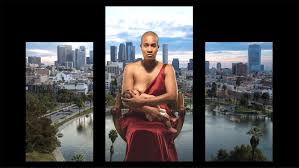
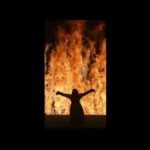
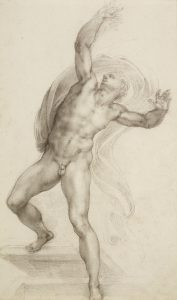 Viola’s world and receives a glimpse of his spiritual awareness. The cleansing of one’s normal attention also made the Michelangelo drawings that much more striking, as one became conscious of the way in which the artist conveys so much of the important essence of the figures with so few strokes of the brush or pen, whether it be a depiction of Christ’s crucifixion, the risen Christ (pictured right) or the tenderness of a nativity scene.